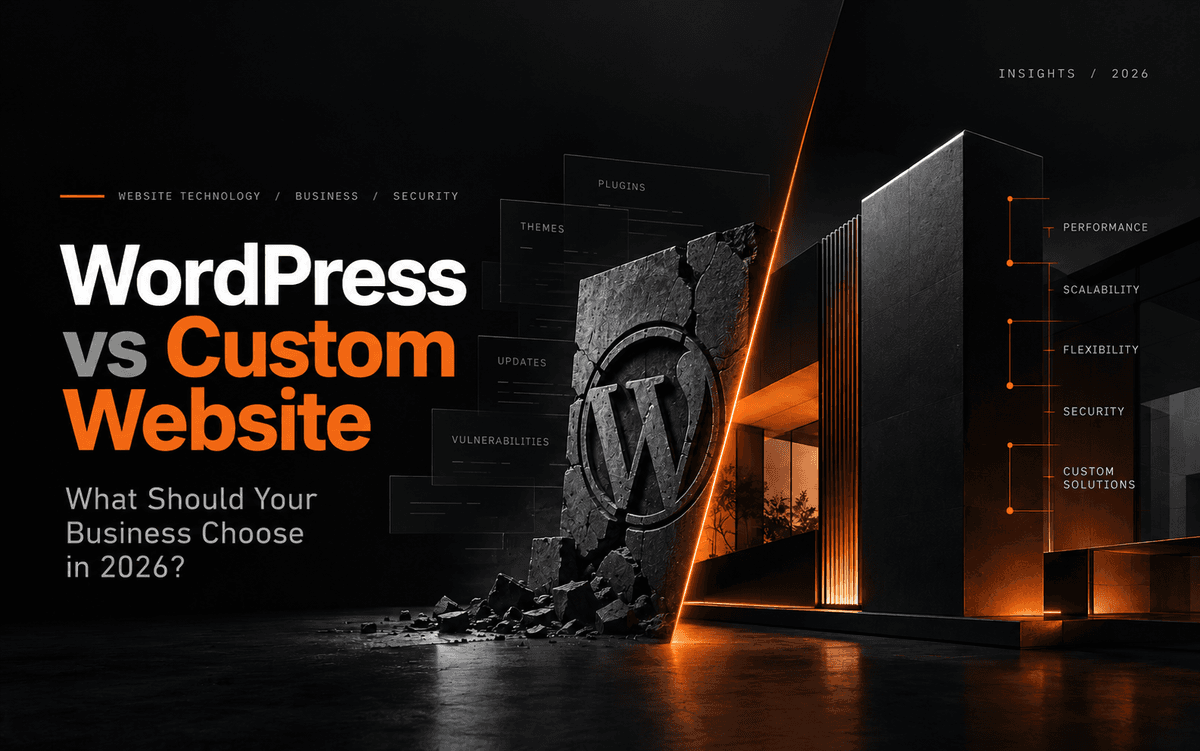
WordPress has powered 43% of the internet for over two decades. But last week, Cloudflare quietly dropped something that has the entire web dev community talking — EmDash, an open-source CMS they're calling the "spiritual successor to WordPress."
Here's what it is, what it solves, and whether you should care.
The WordPress Problem Nobody Wants to Talk About
WordPress itself is reasonably secure. The problem is plugins. 96% of WordPress vulnerabilities come from plugins — and every plugin you install gets full access to your database, your filesystem, and your server environment. No walls, no limits. You're essentially trusting a stranger with your keys.
What EmDash Does Differently
EmDash flips this model completely. Every plugin runs inside an isolated sandbox (Cloudflare Workers). Before a plugin can do anything — read content, make a network call, touch the database — it has to explicitly declare that permission upfront. You know exactly what you're allowing.
It's built on Astro (a modern TypeScript-based web framework), runs serverless, and scales to zero when there's no traffic — meaning you only pay for actual CPU time used.
The AI-Native Part
This is where it gets interesting for 2025. EmDash ships with a built-in MCP server, which means AI agents like Claude or ChatGPT can directly manage your content, create schemas, and deploy plugins — programmatically. It's not AI bolted on. The whole architecture is designed around it.
What's Missing
WordPress has 60,000+ plugins and a massive theme ecosystem built over 20 years. EmDash has none of that yet. Setup requires CLI and technical configuration — there's no five-minute install wizard. And it's still beta (v0.1.0), meaning it's not ready for production sites.
Our Take
EmDash won't replace WordPress next year, or the year after. But it represents a genuine shift in how CMSes will be built going forward — security by design, AI-native, serverless. The same way WordPress replaced hand-coded HTML in the 2000s, something like EmDash could reshape publishing in the 2030s.
For now? Worth watching closely.
At Webeez, we build on Next.js with custom CMS setups — which gives us the same performance and control benefits EmDash is trying to democratize. If you're curious how that compares to your current WordPress setup, get in touch.