AI Automation Is Becoming a Business Necessity
AI automation is no longer just a trend for large technology companies. Today, businesses of every size are exploring AI agents, website chatbots, automated lead qualification, WhatsApp replies, CRM updates, customer support workflows, and internal task automation.
For founders and business owners, this shift is important because AI can reduce manual work, improve response speed, support sales teams, and create better customer experiences. But as AI adoption grows, one thing is becoming very clear: automation should not be built only for intelligence. It should also be built for reliability.
The Real Risk Is Not AI. The Risk Is Fragile Automation
Many businesses think the biggest question is, “Should we use AI?” But the better question is, “How safely and reliably is our AI system built?”
A fragile AI automation setup depends too much on one model, one tool, one platform, or one workflow. If that model becomes unavailable, if a platform changes its API, or if a tool suddenly changes its pricing or access rules, the entire business process can be affected.
Recent AI model access restrictions in the global market show why businesses should think beyond short-term AI hype. Anthropic stated that access to Fable 5 and Mythos 5 had to be suspended because of a US government directive, while other Anthropic models were not affected. The lesson for business owners is simple: AI systems should be flexible enough to continue working even when the technology landscape changes.
Why Reliable AI Systems Matter for Business Owners
A reliable AI system does more than answer questions. It supports real business operations.
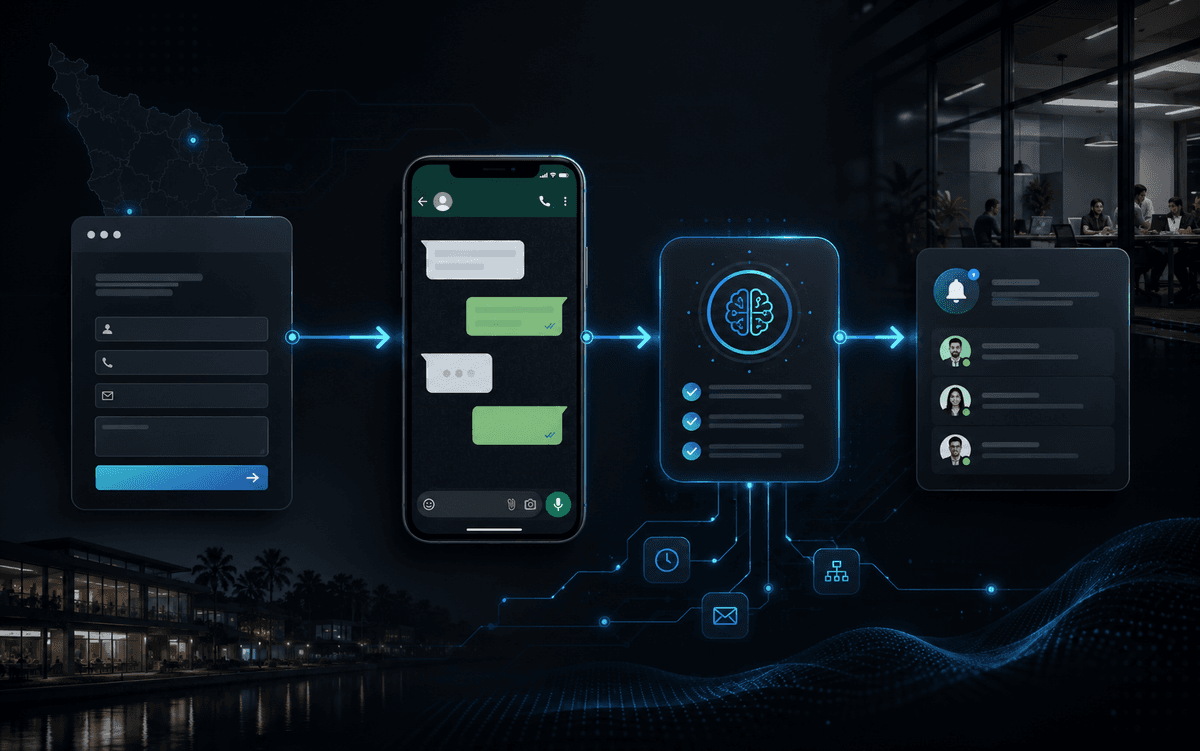
For example, a website AI agent can capture leads, understand customer needs, qualify enquiries, send details to a CRM, notify a sales team, and hand over complex conversations to a human. A reliable system should continue working even if one AI provider becomes slow, unavailable, expensive, or unsuitable for a specific task.
This is where professional AI automation matters. The goal is not just to connect an AI chatbot to a website. The goal is to build a business-ready system with fallback logic, human handoff, secure data flow, clear rules, and measurable outcomes.
What Makes an AI Automation System Reliable?
A reliable AI automation system should have a clear structure behind it. It should know when to reply automatically, when to ask for more details, when to qualify a lead, and when to pass the conversation to a human team member.
It should also have backup planning. If one AI model is not available, the system should be able to shift to another model or workflow. If a customer asks something sensitive or complex, the system should not guess blindly. It should follow business rules and escalate when needed.
Reliable AI automation is not about removing human control. It is about helping businesses work faster while keeping control, quality, and consistency.
AI Agents for Websites, WhatsApp, Instagram, and CRMs
Modern businesses receive customer enquiries from multiple platforms. A customer may message through a website form, WhatsApp, Instagram, LinkedIn, or a landing page. Without automation, these leads can easily be missed, delayed, or handled inconsistently.
AI agents can help businesses manage these conversations more efficiently. They can answer common questions, collect customer details, qualify leads, schedule follow-ups, and send information to the right team. When connected properly with CRM systems and internal workflows, AI agents can become a powerful part of business growth.
But these systems should be designed carefully. A good AI agent should not be just a chatbot. It should be part of a reliable business workflow.
The Future Belongs to Businesses That Build AI the Right Way
AI automation will continue to become more important for businesses. But the companies that benefit the most will not be the ones that simply use the latest AI tool. The real winners will be the businesses that build reliable, flexible, and future-ready AI systems.
For business owners, the message is clear: AI automation is the future, but fragile automation is the risk.
At Webeez, we help businesses build practical AI automation systems for websites, customer communication, lead management, and workflow automation. Our focus is to create AI-powered systems that are not only smart, but also reliable, scalable, and built for real business use.
Looking to build a reliable AI automation system for your business? Webeez helps businesses create AI agents, website automation, and smart workflows that improve speed, reduce manual work, and support growth.