Many businesses in Kerala do not lose leads because their product is weak. They lose leads because follow-up happens too late.
A customer fills a form, sends a WhatsApp message, clicks an Instagram ad, or asks for a price. The team sees it after a few hours. Sometimes the first reply goes out the next day. By then, the same customer may have contacted three other businesses and chosen the one that responded first.
This is where AI lead follow-up automation becomes useful. It helps businesses respond faster, organize enquiries, qualify serious prospects, and make sure no lead is forgotten after the first message.
Why lead follow-up is a serious problem for growing businesses
For many small and growing businesses, enquiries come from multiple places. Website forms, WhatsApp, Instagram, Facebook, Google Business Profile, phone calls, landing pages and referrals can all bring potential customers.
The problem is that most of these enquiries are handled manually. One person checks WhatsApp. Another person checks Instagram. Someone else looks at website form submissions. If the team is busy, travelling, talking to another customer, or working after office hours, the enquiry waits.
This delay directly affects conversion. A lead that is interested today may not be interested tomorrow. In service businesses, clinics, real estate, education, interior design, travel, software and local agencies, fast response often creates trust before the actual sales conversation begins.
What is AI lead follow-up automation?
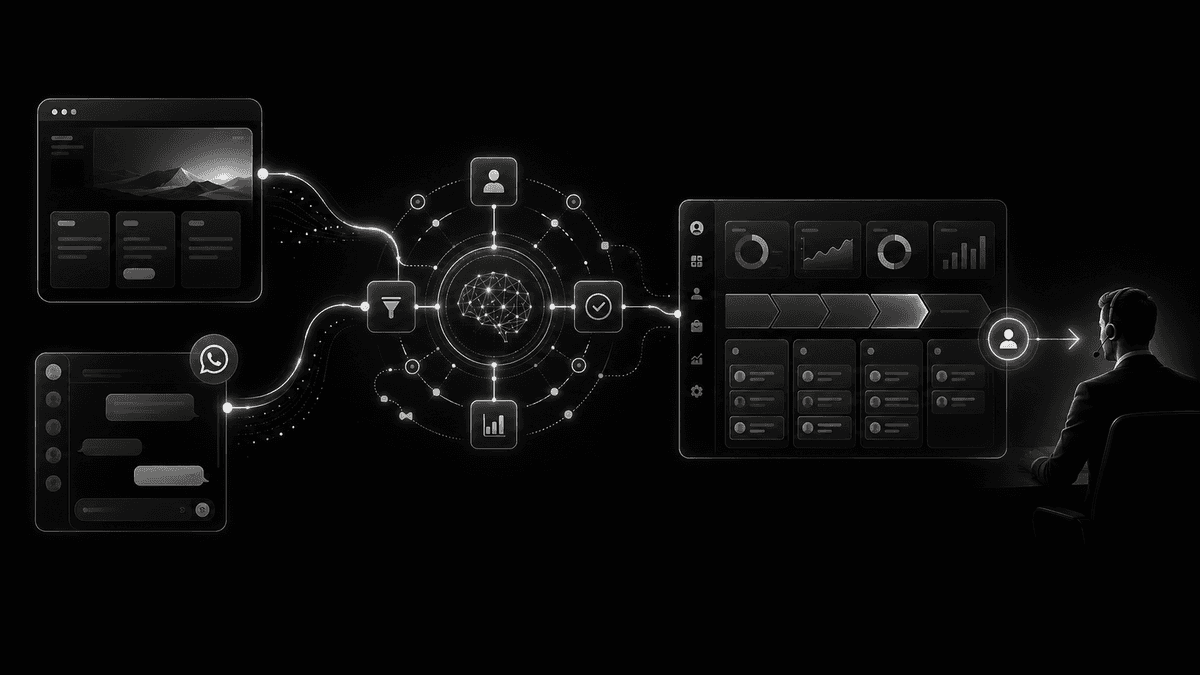
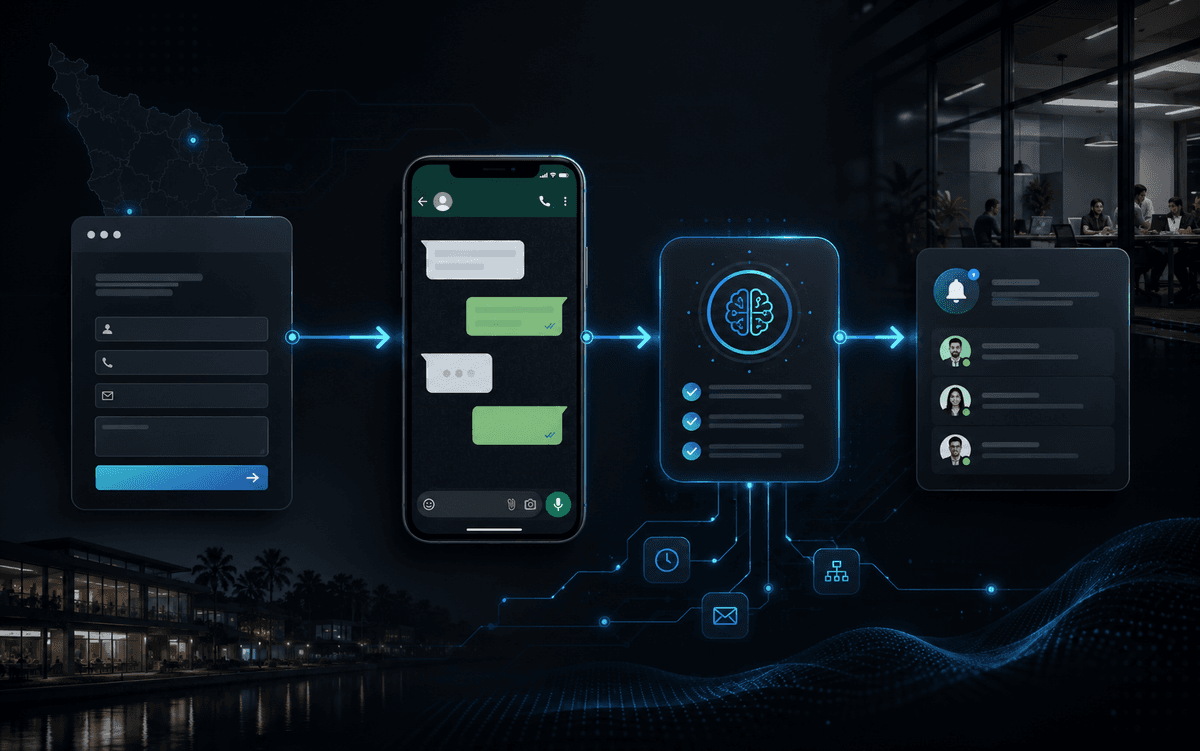
AI lead follow-up automation is a system that helps a business respond to new enquiries, collect important details, qualify the lead, update a CRM or database, and remind the team to take action.
It does not mean replacing the sales team completely. A good automation system supports the team. It handles repetitive work, gives quick first responses, asks basic questions, and passes serious leads to a human at the right time.
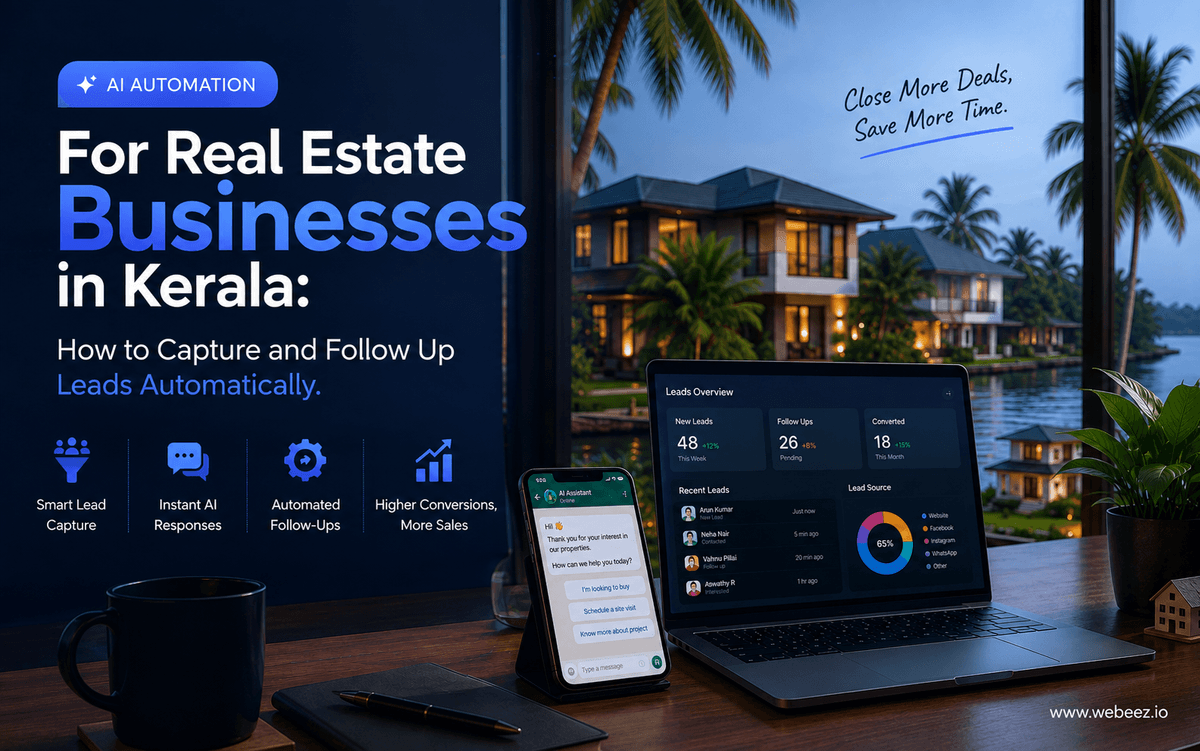
Businesses looking for AI automation services in Kochi can use this approach to connect website forms, WhatsApp messages, landing pages, CRM tools, email notifications and human sales follow-up into one organized workflow.
1. Instant response after a customer enquiry
The first response is the most important part of lead follow-up. When a customer submits an enquiry, an automated system can immediately send a reply through WhatsApp, email or website chat.
This response can thank the customer, confirm that the enquiry has been received, and ask one or two simple questions. For example, a real estate business can ask about budget and location. A clinic can ask whether the customer wants an appointment. A service company can ask what type of service is required.
This makes the business feel active and professional, even when the team is busy.
2. Lead qualification without manual effort
Not every enquiry is ready to buy. Some people are just comparing prices. Some are serious. Some need immediate support. Some need follow-up after a few days.
AI automation can help classify leads based on the answers they provide. It can identify whether the enquiry is urgent, warm, cold, high-value or incomplete.
For example, if a customer shares budget, requirement, location and timeline, the system can mark that lead as high priority. If the customer only asks for a general price, the system can send basic information and schedule a softer follow-up.
3. WhatsApp follow-up automation
In Kerala, WhatsApp is one of the most practical channels for customer communication. Many customers prefer asking questions through WhatsApp instead of filling long forms or waiting for email replies.
A proper follow-up system can send structured WhatsApp messages after a customer enquiry. It can send service details, request missing information, remind the customer about a call, or share the next step.
WhatsApp automation is one of the most practical ways to follow up with Kerala business leads after the first enquiry.
The important point is control. The messages should not feel robotic or spammy. They should be short, useful and timed properly. The customer should also have an easy option to talk to a real person.
4. CRM updates and lead tracking
A common problem in growing businesses is that leads are scattered across chats, notes, spreadsheets and phone contacts. This makes follow-up difficult.
With automation, every enquiry can be added to a CRM or lead tracker automatically. The system can save the customer name, phone number, source, requirement, status, follow-up date and assigned team member.
This gives the business a clear view of active leads. It also helps owners understand which channel is bringing better enquiries and where the sales team should focus.
5. Missed lead recovery
Many leads are not lost immediately. They are lost because nobody follows up after the first reply.
AI lead follow-up automation can create reminder sequences. If a customer does not respond, the system can send a polite follow-up after a set time. If the customer still does not respond, it can notify the team or move the lead into a different status.
This is useful for businesses that receive many enquiries but do not have a dedicated follow-up team. Instead of depending on memory, the system keeps the process moving.
- Human handoff for serious enquiries
The best automation systems know when to stop. If a customer asks a complex question, requests negotiation, shares a serious buying signal, or needs personal support, the system should hand over the conversation to a human.
This is why reliable AI systems are important. Automation should not create confusion. It should have fallback rules, human handoff, clear notifications and safe boundaries.
For most businesses, the ideal model is not full automation. The ideal model is assisted automation, where AI handles repetitive tasks and humans handle trust, decision-making and closing.
7. Better website enquiry conversion
A business website should not only look good. It should help visitors take action and help the team follow up with them properly.
This is why web design and development services should be planned together with automation. A website form, landing page, chatbot, WhatsApp button and CRM workflow should work as one system.
For some businesses, a website AI chatbot for Kerala businesses can also help collect details before the customer leaves the website. The chatbot can answer basic questions, capture contact details and send the lead into a follow-up workflow.
Where AI lead follow-up helps most
AI lead follow-up automation is useful for many types of businesses in Kerala.
Real estate businesses can qualify buyers by location, budget and property type. Clinics can manage appointment requests and patient enquiries. Education businesses can follow up with students and parents. Interior and construction companies can collect project details. Travel businesses can ask destination, date and number of travellers. Agencies and service companies can qualify project requirements before a sales call.
In each case, the goal is the same: respond faster, collect better information and reduce the chance of losing a potential customer because of delay.
What should not be fully automated?
Not everything should be handled by AI. Pricing negotiations, sensitive customer issues, complaints, complex project discussions and final sales decisions often need human attention.
AI should support the business, not damage the customer experience. A badly planned automation system can send irrelevant replies, repeat the same message too often, or frustrate customers who need real help.
That is why every automation workflow should be designed with clear rules, human takeover options, message limits and proper testing before going live.
How Webeez approaches AI lead follow-up automation
At Webeez, we look at automation as part of the full digital growth system. A business needs a clear website, strong brand trust, proper lead capture and a follow-up process that works even when the team is busy.
For AI lead follow-up automation, the process usually starts by understanding where enquiries come from, how the sales team currently responds, what information is needed from the customer, and when a human should take over.
Then we design a workflow that connects the right channels: website forms, WhatsApp, CRM, email alerts, dashboards or custom tools. The goal is not to make the system complicated. The goal is to make follow-up faster, clearer and easier for the business team.
Final thoughts
Lead generation is only one part of business growth. The bigger opportunity is lead follow-up.
If a business spends money on websites, ads, social media or Google visibility but does not respond to enquiries quickly, a large part of that effort is wasted.
AI lead follow-up automation helps solve this gap. It gives customers faster responses, gives teams better lead information, and gives business owners more control over the sales process.
For Kerala businesses that want to improve enquiry handling, the next step is not just getting more leads. The next step is building a system that makes sure every good enquiry is followed up properly.